


Penn State’s LionGlass project has reached a major milestone in its partnership with Italian glassmaker Bormioli Luigi.
The pair have marked a year of collaboration with the signing of a second-year agreement to continue commercialisation efforts in the cosmetics packaging industry.
The partnership, which began in 2024, aims to scale up LionGlass as a sustainable alternative to traditional soda lime glass.
LionGlass melts at temperatures up to 400(C) lower than conventional glass and eliminates direct carbon dioxide (CO2) emissions by removing carbonates from the glass batch.
It also offers enhanced mechanical durability, in some cases up to 10 times higher crack resistance than conventional glass.
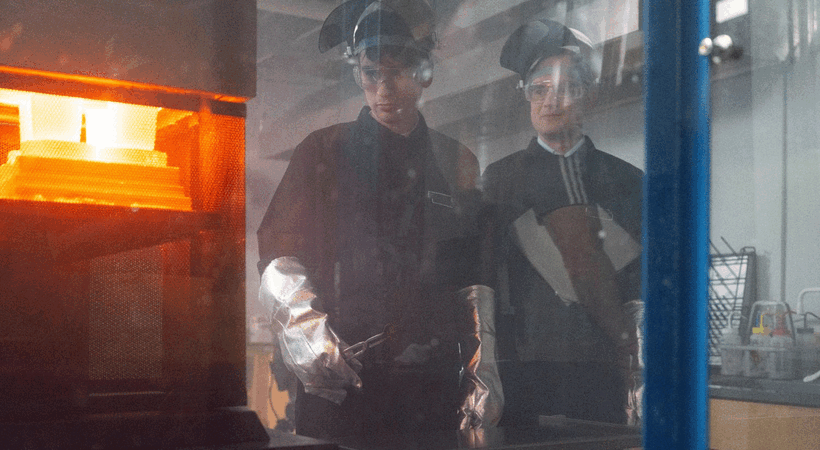
In March, researchers from Penn State university joined Bormioli Luigi glassmakers for a pilot trial in Murano, Italy.
Over two days, the team melted two 100-kilogramme batches of LionGlass in a gas-powered furnace and formed more than 150 clear glass cups, demonstrating that the glass can be manufactured at scale.
Despite the furnace not being designed for the largest scale continuous production, the trial was deemed a success.
Nicholas Clark, an assistant research professor at Penn State and co-inventor of LionGlass who is now leading commercialisation efforts, said: “We were able to not only show that LionGlass could be melted at lower temperatures and without carbonates, but we also demonstrated the formability of LionGlass and its ability to remain transparent and smooth."
The trial also confirmed compatibility with traditional, industrial-style glass manufacturing techniques, a step toward full commercialisation and application for a variety of products, Clark said.
Major cosmetics brands have expressed interest in LionGlass, signalling its potential to reshape luxury packaging with a more sustainable material, said John Mauro, co-inventor of LionGlass and Penn State professor and department head of materials science and engineering.
Looking ahead, the team plans to refine LionGlass compositions to improve mechanical performance and chemical durability, with hopes of matching or exceeding the properties of soda lime glass.
For example, one recent breakthrough is the development of new LionGlass compositions containing strontium oxide (SrO), which improves several properties of interest for manufacturing and customer end-use. Another trial in Italy is anticipated in the coming months.
Elisa Biavardi, a researcher and lab manager for Bormioli Luigi, said: “Our collaboration with Penn State has been incredibly rewarding.
“We’ve been impressed by the dedication, creativity and scientific rigor of the research team.
"The successful trial in Murano was a testament to what’s possible when tradition meets innovation.
"We’re excited to continue this journey together and bring LionGlass closer to full-scale commercialisation.”
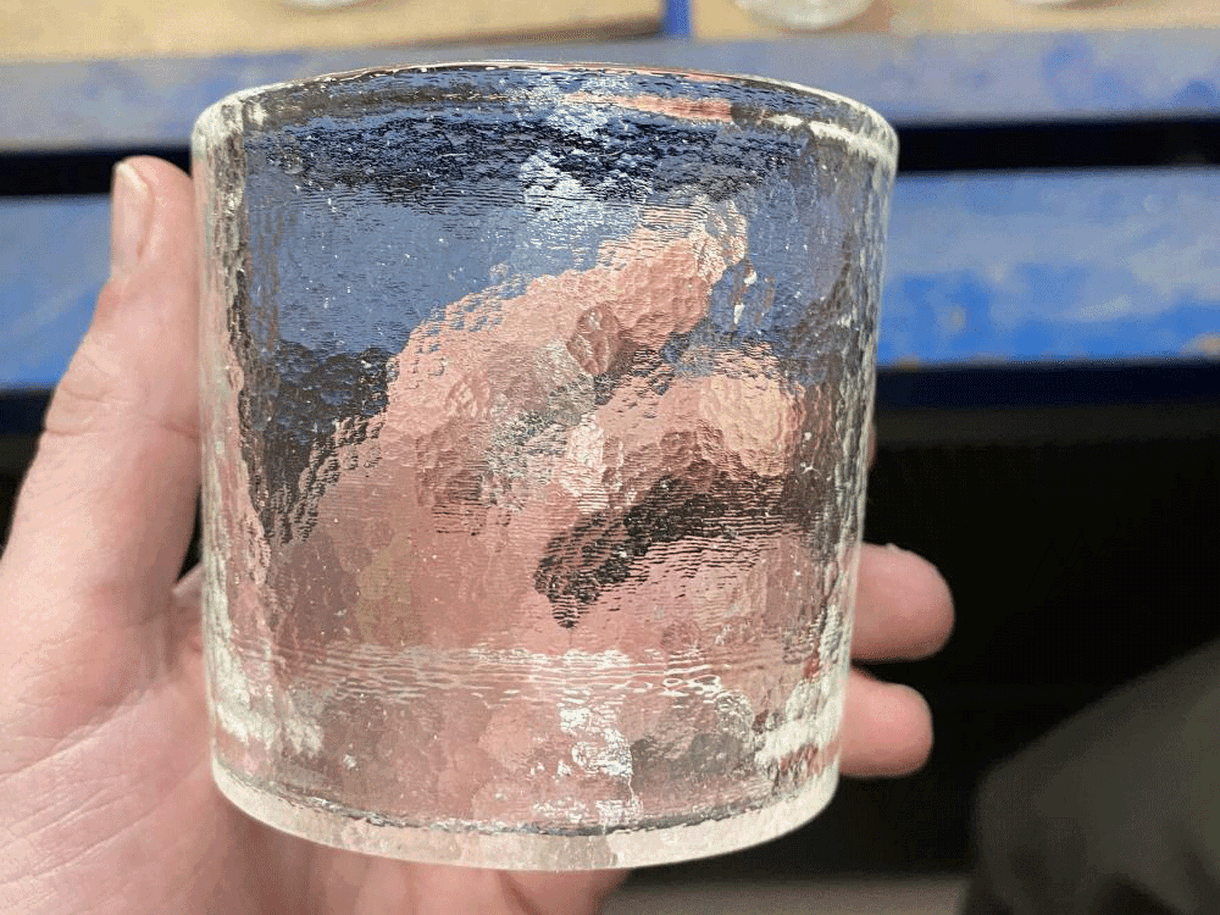
Photo above: Over two days, the team melted two 100-kilogramme batches of LionGlass in a gas-powered furnace and formed more than 150 clear glass cups. Image: Nicholas Clark
