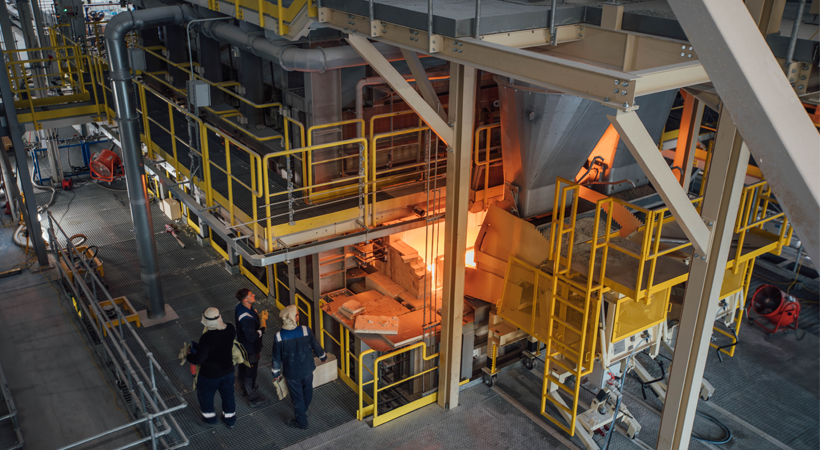
Glass Futures has completed its alternative fuel trial programmes, which tested biofuels, electric melting, and hydrogen capabilities at its pilot facility in St Helens, UK.
The alternative fuels were tested on its 30 tpd line, which features what Glass Futures described as "the world’s first multi-fuel, hybrid, pilot-scale glass furnace".
The trials started in October 2025 and have delivered results that demonstrate the technical potential of low-carbon fuel technologies at industrially relevant scales.
Justin Kelly, CEO of Glass Futures, said: “The successful completion of these trial programmes marks a crucial milestone not just for Glass Futures, but for the industry’s journey to net zero.
“We have demonstrated, at industrial scale, the technical viability of a number of alternative low-carbon fuel pathways that have never before been trialled in this way.
“It is a testament to the resilience, ingenuity, and collaboration of the entire Glass Futures team.”
Key successes include the installation and commissioning of a bespoke biofuel delivery system, which is fully integrated into the site’s digital control environment.
It has been used to successfully fire four novel, low-cost, waste-derived biofuels for sustained periods over several days.
In addition, the Glass Futures team, supported by FIC UK, installed, commissioned, and trialled a custom electric-boost (e-boost) system.
The work tested a range of power settings, including rapid switching, to demonstrate how a glass furnace could provide demand-side response capabilities to local electricity networks.
Glass Futures also commissioned a new hydrogen fuel delivery system on the pilot line, enabling successful firing of hydrogen supplied by Ryze Power and natural-gas blends, up to 100% hydrogen.
The organisation said the trials had attracted strong interest across its membership, the UK Government, and the wider foundation industries.
Barry King, Engineering Manager at Encirc, said the glass manufacturer was delighted to be a part of the “ground-breaking” trials.
Glass Futures is already discussing its next campaign with members, which will explore the next generation of raw materials and process innovations.
It is also looking to its third campaign, to explore product advancements in both flat and packaging glass.
The organisation has now commenced the next phase of pilot activity through its AI-Glass project, funded by the Made Smarter Innovation Programme at Innovate UK.
The project will gather operating data to validate the advanced furnace model, allowing advanced sensing, digitalisation and intelligent control to further optimise industrial furnace performance and reduce emissions.