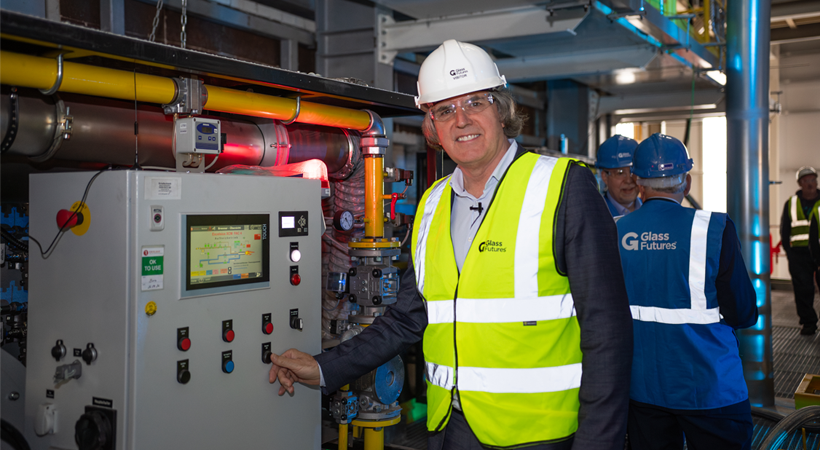
Glass Futures has lit the experimental furnace at its Global Centre of Excellence in St Helens, UK.
In a dedicated ceremony, Steve Rotheram, Mayor of Liverpool City Region, lit the 30 tpd furnace yesterday (June 25th).
The furnace is able to use low-carbon fuels including green electricity, hydrogen, and biofuels such as used cooking oils.
It can also reach temperatures of 1600°C and produce over 2 miles of flat glass a day, as well as being able to create container glass.
It will be used in international trials aimed at creating sustainable, lower-carbon glass, as well as other materials.
Justin Kelly, CEO of Glass Futures, said: "Following the Prime Minister's visit last month, today marks a defining moment - not just for Glass Futures, our members and St Helens but for the entire global glass and foundation industries.
“There is no other facility in the world capable of producing both flat and container glass using such a wide range of sustainable fuel sources, including electric melting.
“This isn't just about decarbonising glass - it's about working with our membership to transform global manufacturing.”
The pilot line is smaller in size than an industrial production line allowing rapid innovation with results that can be scaled up for industry.
It is fully automated with Siemens control technology, and has high-definition cameras allowing for real-time adjustments to optimise energy use and glass quality.
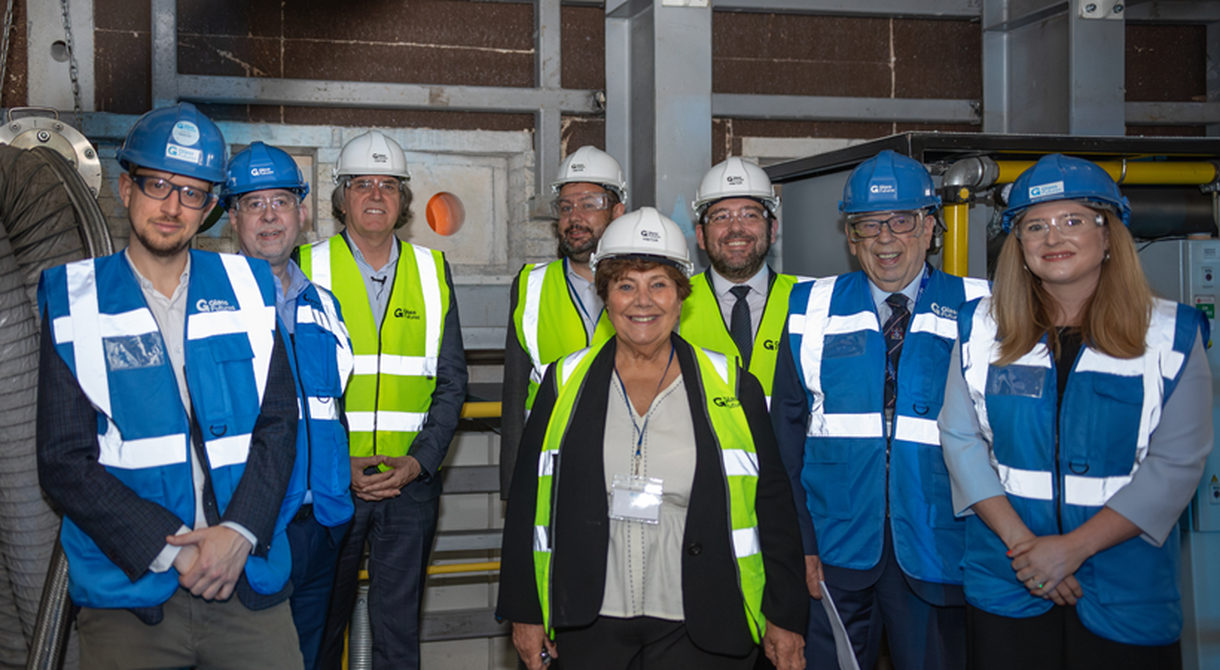
Left to right: Aston Fuller (General Manager), Justin Kelly (GF CEO), Steve Rotheram (Metro Mayor of Liverpool City Region Combined Authority), Cllr Anthony Burns (Leader of St Helens Council), Marie Rimmer (MP), David Baines (MP), Richard Katz (President), and Sarah Harrold (GF Head of Strategy and Government Engagement).
High-powered electric boosting for the furnace - equivalent to the energy usage in 2000 homes - means it can melt raw materials faster supporting carbon emissions reductions of up to 56%.
Richard Katz, Founder of Glass Futures, said: "Decarbonising global manufacturing is one of the greatest challenges of our time.
“The foundation industries - glass, ceramics, steel, metals, chemicals, paper, and cement - are vital to modern life, yet they account for around 10% of the UK's carbon emissions.
"Glass Futures gives manufacturers the space to innovate, test and de-risk new processes away from live production lines.
“Glass is infinitely recyclable and is one of the best packaging materials so it's about unlocking sustainable solutions that are scalable and commercially viable."
Glass Futures staff, members and invitees, including the local authority and MPs, attended yesterday's ceremony.
The furnace was warmed up to temperature with the first piece of glass rolling off the line before the industrial trials began.
The furnace lighting can be seen in the video below, courtesy of Glass Futures.