


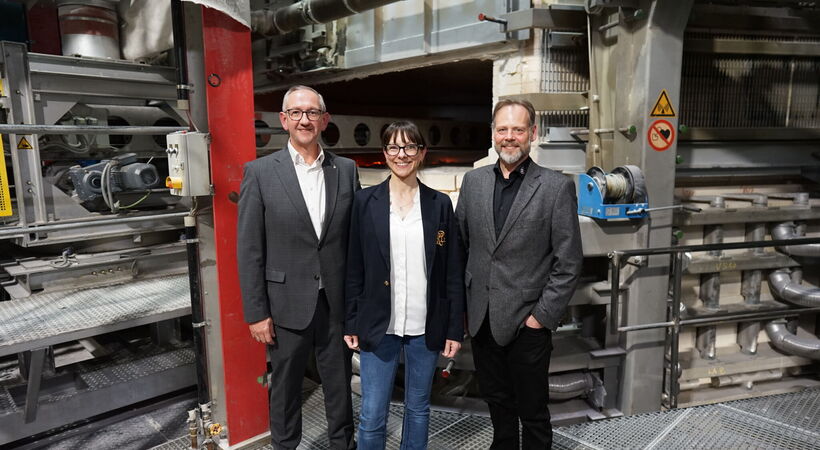
Heinz-Glas inaugurated an all-electric glass melting furnace at its plant in Kleintettau, Germany in April.
Construction costs amounted to approximately €13 million.
The furnace uses CO2-free electricity.
Michael Wagner, Global Director Operations of glass at Heinz-Glas, discussed the reasons behind constructing the furnace, and gave an insight into the recent celebrations.
Mr Wagner revealed: “We celebrated the inauguration of the new furnace in a small, internal setting.
“No external guests were invited, with the exception of a priest who performed a ceremonial blessing of the furnace.
“After the inauguration, colleagues gathered informally at the Kleintettau volunteer fire brigade station to celebrate together.”
Details of the furnace
The furnace was named Josephine, in honour of the day production began.
Production began on March 19, which is the name day of “Josephine.”
The company commissioned an electric furnace, supplied by Fives Stein Ltd.
Five Steins Ltd also supplied previous furnaces in Kleintettau, meaning that the steel construction and foundation from those products can be reused.
The new forehearth system was supplied by Sorg.
Since 2024, all the Heinz-Glas Group's German production sites have used fully electric glass melting furnaces.
Mr Wagner said: “Heinz-Glas continues to focus on sustainability and electrification.
“By installing this new electric furnace, we hope to ensure that glass continues to be melted using electricity in a CO₂-free process.”
Other than the electric melting, no specific sustainable initiatives were part of the investment.
However, during the commission of the furnace, several updates were carried out.
This included total reconstruction of the feeder channels and overhaul of machines.
As a result, more efficient technology was installed at Heinz-Glas’ site, which helps to support sustainability.
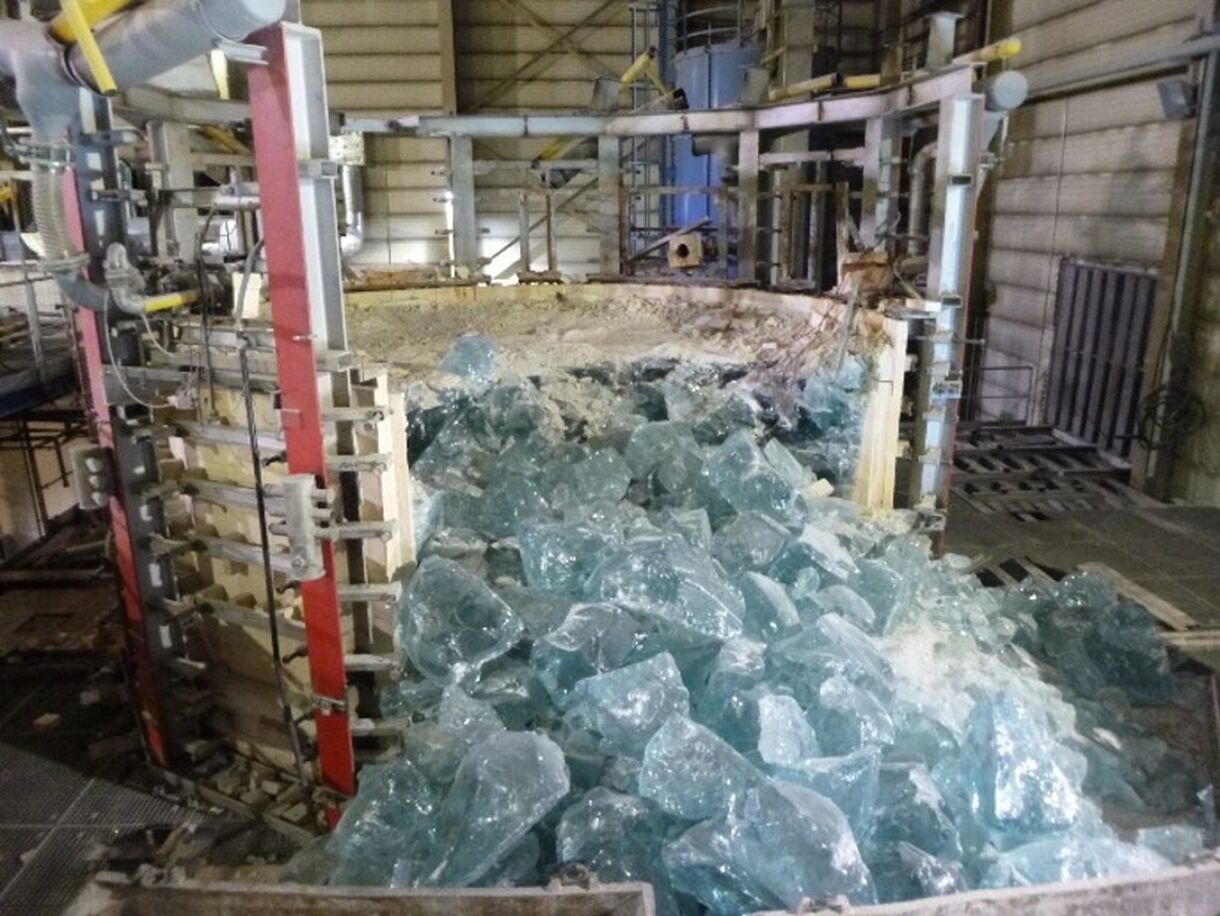
The demolition of the old glass melting tank. Pic source: Heinz-Glas.
Reason behind the commission
It is standard practice for an electric glass melting furnace to be replaced after approximately five to six years, due to wear of the equipment.
The old furnace must be dismantled and a new one constructed.
In Heinz-Glas’ case, the replacement was carried out as part of this regular cycle.
The company also invested in further equipment at the plant.
Mr Wagner said: “On one line a box exchange took place incl. new control unit for the complete machine and new feeder machine.
“A new feeder machine was also installed on another line, and three new lehr loaders/stackers were installed.
“An automatic packaging cell was also installed.”
Challenges and achievements
The project was a vast and time-consuming one, taking approximately 14 weeks, starting with the draining and cooling the old furnace, followed by its demolition, rebuilding, and tempering.
Mr Wagner said: “The biggest challenge with this project was the weather, because the rebuild was in the wintertime (we have strong winters in Kleintettau) as well as the logistics around the rebuild.
“It was a major challenge to have all the necessary materials for the new furnace and forehearth (which were in several external warehouses) on site in time.”
However, the project was accomplished successfully, with Heinz-Glas praising its staff and colleagues for their achievement.
Mr Wagner said: “The furnace construction phase is always a major effort that can only be achieved through strong teamwork.
“Many internal departments must collaborate very closely, with every part working seamlessly together.
“Successful cooperation with external contractors is also essential.
“We are proud that the project was completed successfully through this collective effort.”
Kleintettau is also the headquarters of the Heinz-Glas group, and it plays an important role.
Approximately 1,000 employees work at the Kleintettau site.
After this recent project, the site now has two electric furnaces with 12 lines in total and 120 t/day melting capacity.
