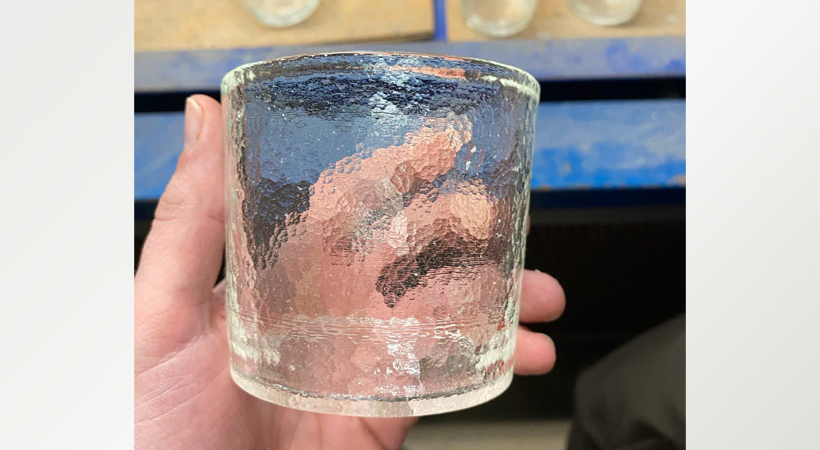
Penn State University has completed its LionGlass pilot trial with Bormioli Luigi.
LionGlass is a family of glass engineered by researchers at Penn State University in the USA and is an alternative to standard soda lime silicate glass.
It can be melted up to 400°C lower than soda lime glass and removes the direct CO2 emission of glassmaking by removing carbonates from the batch.
It also possesses additional properties, such as enhanced crack resistance.
Bormioli Luigi entered into partnership with the university in 2024, with the aim to scale up LionGlass to create bottles for luxury beauty products like cosmetics and perfume.
In March 2025, Bormioli and Penn State conducted a small-scale pilot run using LionGlass in Murano, Italy.
The trial demonstrated that the latest LionGlass composition could be melted in large quantities and formed into vessels.
It also confirmed that LionGlass was compatible with traditional AZS refractories and electrode materials.
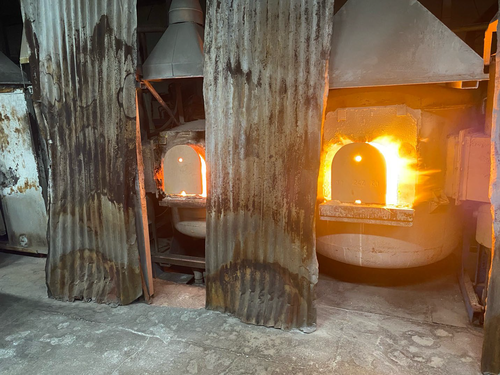
The furnace used for the trial can be seen on the left, next to a furnace melting soda-lime glass to the right.
The two-day trial consisted of two 100 kg batches melted in a gas-powered hot crown tank.
No carbonates were used, with phosphate compounds being the only source of P2O5.
The batches were melted overnight at 1150°C.
In total, over 150 cups were produced.
Penn State said it considered the trial a great success overall.
“We were able to not only show that LionGlass could be melted at significantly lower temperatures and without carbonates at the intermediate scale, but also demonstrated the formability of LionGlass and its ability to remain transparent and resist devitrification.”
A full account of the trial will be available in an upcoming edition of Glass International.