Professor John Mauro of Penn State University shared the latest developments of the LionGlass project through a video presentation, highlighting its potential applications and environmental benefits.
LionGlass is a family of glass engineered by researchers at Penn State University in the USA.
It aims to offer a lower-carbon alternative to soda lime silicate glass, which is used for everyday items including windows, jars and drinking glasses.
In his presentation, Professor Mauro, co-inventor of LionGlass, discussed its suitability for architectural glazing and its broader impact on reducing carbon emissions.
He said the global glass industry is responsible for emitting approximately 86 million tons of CO₂ annually.
The production of soda lime silica glass accounts for over 90% of this carbon footprint.
LionGlass addresses this issue by eliminating the use of carbonate batch materials, and has a melting temperature roughly 400°C lower than other glass products.
It is also approximately ten times more crack-resistant, which could allow manufacturers to produce lighter glass products - further lowering transportation emissions and improving sustainability.
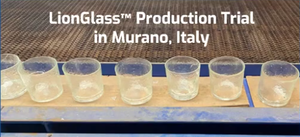
Professor Mauro also shared results from LionGlass' first pilot-scale trial with Italian glassmaker Bormioli Luigi in Murano.
He said the successful production of glass cups (see above) demonstrated the material’s scalability.
Bormioli Luigi entered into partnership with Penn State University in 2024, with the aim to scale up LionGlass to create bottles for luxury beauty products like cosmetics and perfume.
See the full presentation below: