


Pilkington UK is enhancing its research and development engineering capabilities through the use of virtual reality technology.
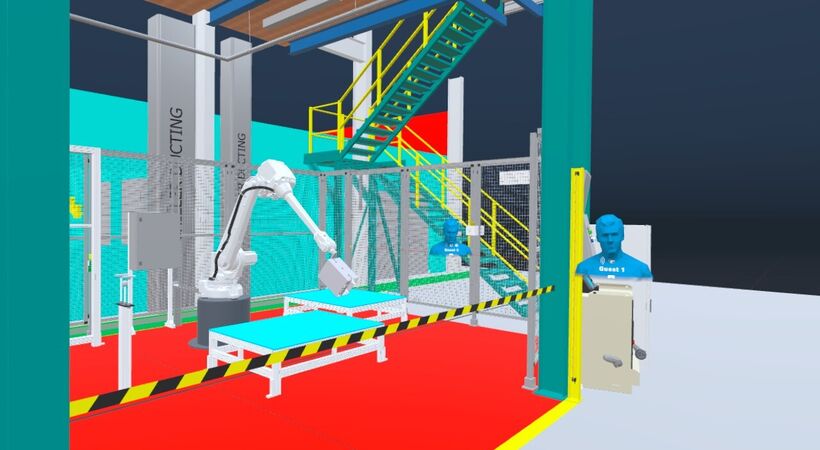
The glass manufacturing company, part of the NSG Group since 2006, has harnessed immersive VR technology to plan and review the installation of a new robotic cell.
Engineers at Pilkington UK’s European Technical Centre in Lathom, UK, used the technology to create a full-scale 3D model of the area before any physical build began.
This enabled the team to assess layout, safety, and workflow in a shared digital environment, ensuring potential design conflicts could be identified and resolved early in the process, and marks a key change in how the business conducts engineering reviews.
By leveraging VR, teams can collaborate on complex projects more effectively, reduce the need for repeated on-site visits, and gain a clearer understanding of how people, machinery, and equipment will interact within production environments.
Dave Ash, Regional Sustainability Manager at NSG Group, said: “Virtual reality allows us to bring our designs to life before they reach the factory floor, so we can accelerate project validation, improve safety and identify optimisations that would otherwise only become visible after installation.
“What began as a practical solution has now become an opportunity to rethink how we design and communicate complex engineering work, opening up new ways for our teams to collaborate globally, sharing expertise across borders with ease.”
Pilkington UK’s use of VR reflects a wider trend in the manufacturing sector.
Globally, the VR-in-manufacturing market is forecast to grow by nearly 30% a year through to 2032, as companies adopt immersive tools to improve precision, productivity, and sustainability.
Pilkington UK’s engineering teams are exploring how VR can be applied to other research and development and production projects.
By using advanced technologies like VR and automation, Pilkington UK can reduce its environmental impact and enhance workplace safety.

