


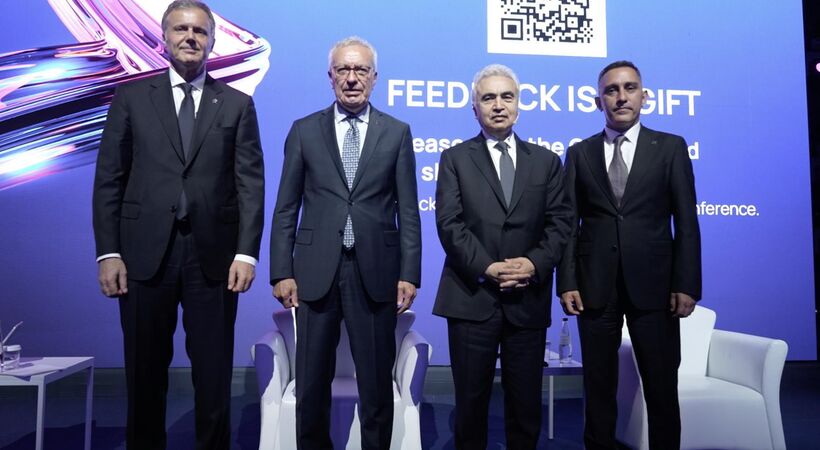
Şişecam held its 40th Şişecam International Glass Conference in Istanbul, Turkey.
Held from 18-19 June, the conference had the theme: 'United to Innovate: A Future-Focused Transformation of Energy and Glass’.
It brought together leading figures, academia, and the world of technology, to address critical issues which are shaping the future of the glass industry.
Discussions included decarbonisation, energy efficiency, and digitalisation.
In his opening speech, Şişecam's CEO Can Yücel highlighted the scientific depth of glass and the ongoing transformation of the industry.
He said: “The quest to produce glass that is more functional, more sustainable, and lighter is a journey with no finish line.
“Sustainability is a core transformation agenda shaping our entire value chain.
“Glass is, by nature, a highly energy-intensive industry.
“As an industry, we must work together, innovate, and build strong partnerships to find real solutions to the environmental and operational challenges of our energy-heavy structure.
“At Şişecam, our goal is to lead these sector-wide solutions with our 50 years of strong R&D experience.
“The Şişecam International Glass Conference is an important platform that supports us in achieving this goal.”
Among the event's keynote speakers, Dr. Fatih Birol, Executive Director of the International Energy Agency (IEA), assessed the impact of the global energy transition on industry and outlined a low-carbon production roadmap for the glass sector.
The conference also featured a special session titled ‘Securing the Transition: Financing the Decarbonisation of Energy-Intensive Industry.’
The session saw Dr. Fatih Birol and Gianpiero Nacci, Managing Director for climate strategy and delivery at the European bank for reconstruction and development (EBRD), discuss financing the low-carbon transition of energy-intensive industries, the investment tools needed to accelerate the transition, and the alignment of public and private sector funding mechanisms.
Davide Cappellino, President of AGC Architectural Glass Europe and Americas, focused on the challenges and opportunities for the European flat glass industry in the context of sustainability, while architect Murat Tabanlıoğlu discussed the role of glass in design and architecture and its contribution to spatial experience.
The two-day conference also featured panels and parallel sessions from experts who discussed topics such as the innovation ecosystem, the industrial-scale application of fundamental research, AI-powered production solutions, and digitalisation.
