


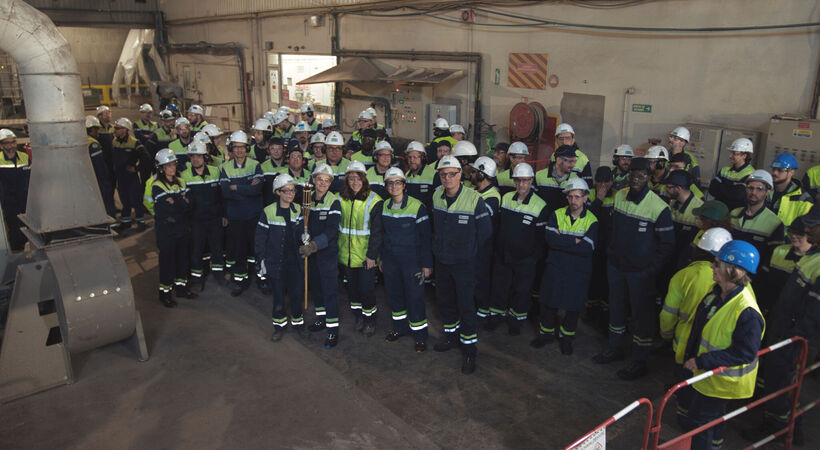
Verallia France has restarted the glass furnace at its Chalon-sur-Saône plant, which is operating at 100% of its production capacity to serve all its customers.
It said renovation work on furnace No. 1 had been completed and it had returned to service.
The completion of the investment is part of the group's industrial modernisation and decarbonisation strategy, to strengthen the plant’s sustainability performance and regional presence.
Following the partial renovation of Furnace 3 in 2022, the complete renovation of furnace No. 1 is a key step in the modernisation plan for plant.
Specialising in the production of clear glass, Furnace No. 1 produces iconic bottles from the Burgundy and Bordeaux regions, as well as speciality products for the spirits, still wine, and food markets, distributed locally, nationally and internationally.
The furnace has ‘super-boosted’ technology to increase the share of electricity in its energy mix.
This has increased to 25%, thus reducing natural gas consumption to 75%. This development has allowed the site to reduce its CO₂ emissions by 11%, while increasing its electrical melting power.
Johanna Lascaux, Director of the Chalon-sur-Saône plant, said: "The complete renovation and restart of Furnace No. 1 embodies our commitment to sustainably modernize our industrial facilities while accelerating our energy transition.
“This restart marks our commitment to reducing the environmental impact of our production, while ensuring the competitiveness and sustainability of our historic site."
Built in 1912, the Chalon-sur-Saône site is now the Verallia Group's largest plant. With its 500 employees and three furnaces, the plant produces nearly a billion bottles each year.
Recognized for its expertise in white glass, it produces the famous "dead leaf" colour characteristic of Burgundy wines.
The site houses Verallia France's glassmaking training centre and the group's technical centres, where 150 experts work on future technological challenges, particularly those related to reducing CO₂ emissions and developing tomorrow's industrial glassmaking solutions.
