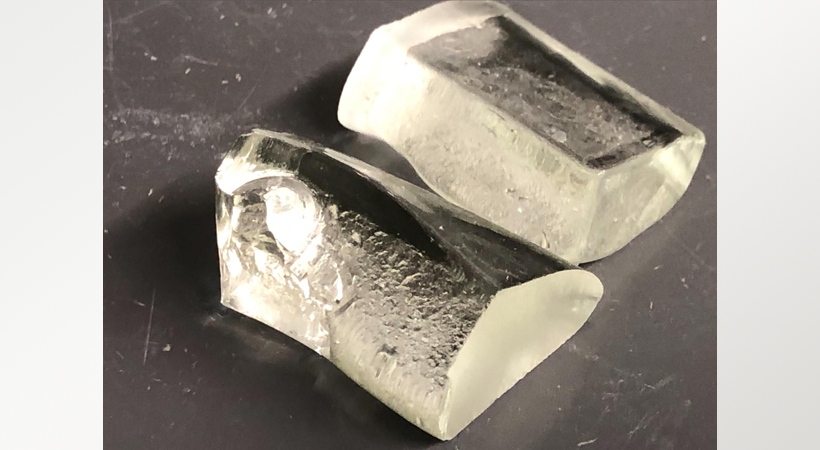
Verallia has partnered with Penn State to scale up the use of LionGlass, a family of glass developed by researchers at the university.
The company has entered into a research partnership with Penn State to test the glass for use in consumer packaging.
Corinne Payen, Director of Glass Innovation at Verallia, said: “LionGlass offers a promising alternative to conventional soda lime silicate glass.
“It melts at temperatures much lower than traditional glass, which saves energy and eliminates the use of carbon-based raw materials, potentially halving the carbon footprint of glass manufacturing.”
LionGlass melts at temperatures up to 400°C lower than conventional glass and eliminates direct CO2 emissions by removing carbonates from the glass formula.
It also offers enhanced crack resistance and durability, in some cases up to 10 times stronger than conventional glass.
John Mauro, Professor and Department Head of Materials Science and Engineering at Penn State and co-inventor of LionGlass, said: “Worldwide, glass manufacturing produces over 86 million tons of CO2 annually.
“LionGlass not only reduces emissions during production but also offers superior mechanical performance – up to 10 times more crack-resistant than standard glass – which could allow for lighter packaging and further reduce transportation-related emissions.”
Glass can preserve food and beverages thanks to its impermeability, chemical stability and infinite recyclability, but traditional glass production is energy intensive.
Therefore, Verallia believes the partnership will help it to achieve its 2040 net zero target, which was recently validated by the Science Based Targets initiative (SBTi).
The company has committed to reducing its CO2 emissions by 90% and offsetting the other 10%.
Ms Payen said: “This partnership opens exciting opportunities aligned with Verallia’s mission: to reimagine glass for a sustainable future.”