


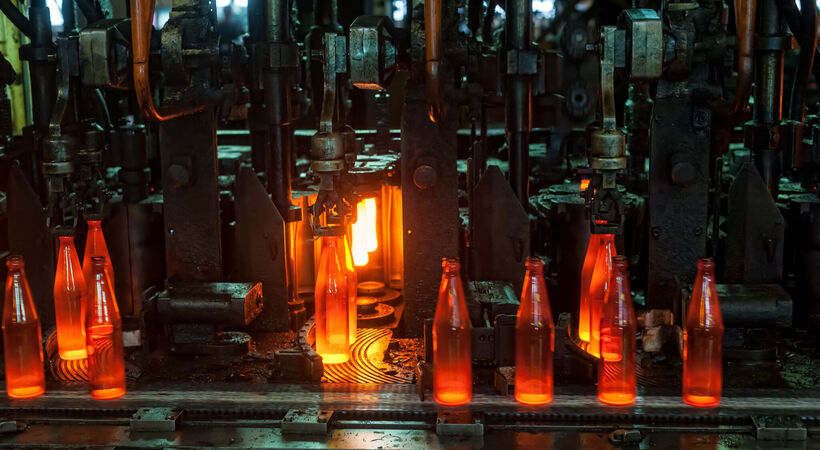
The Italian glass industry reported a 4% increase in the production of hollow glass.
It said 2025 was considered a positive result for the industry despite geopolitical complications such as US tariffs, financial tensions, and war.
Assovetro, the Italian Association of Glass Industrialists, reported the figures at its general assembly last week.
It also appointed Vitaliano Torno as its new president.
Figures
Total glass production in 2025 (cable, flat, yarns and tableware) exceeded 5.5 million tonnes, with a total turnover of approximately 9 billion.
For glass containers (bottles, jars, vials), production was over 4.5 million tonnes, an increase of 4% compared to the previous year.
This was driven by the production of bottles, which increased by 5.8% compared to 2024.
The trade balance increased in exports and decreased in imports for all sectors.
Flat glass reported an increase of 19.3% in exports and a decrease of 20.4% in imports, with hollow glass increasing exports by 8% and decreasing imports by 3.7%.
Bottles also recorded an export boom, with exports rising to 23.8%.
In addition, the sectoral added value rose again by 0.3%, after two years with negative numbers.
Recent data from Close the Glass Loop also recorded an increase in the Italian glass recycling rate to 82.1%.
However, the situation of flat glass still remains complex, due to the automotive crisis, with a drop in production of more than 3%.
Marco Ravasi, outgoing president of Assovetro, said: “2025 has seen positive results for the national industry, which demonstrates the solidity of a manufacturing that has become the first in Europe in terms of production capacity and has bet on new plants, while Europe reduced them.
“But we are facing complex industrial, environmental and strategic challenges in the sector, and in this first half of 2026 there are not reassuring signs.
“The conflict in the Persian Gulf has caused oil and gas prices to rise and energy prices, the raw material of our industry, have risen again to levels among the highest in recent years, putting competitiveness and energy transition at risk.”

